
Apply for a job
Choose grid operators, leading solar companies or both, then upload or fill in your CV.
Live courses, free textbooks and a regional technician directory you join only after approval. No middlemen, no marketing promises.
The founder's video introduction
Ivaylo, founder of USS One
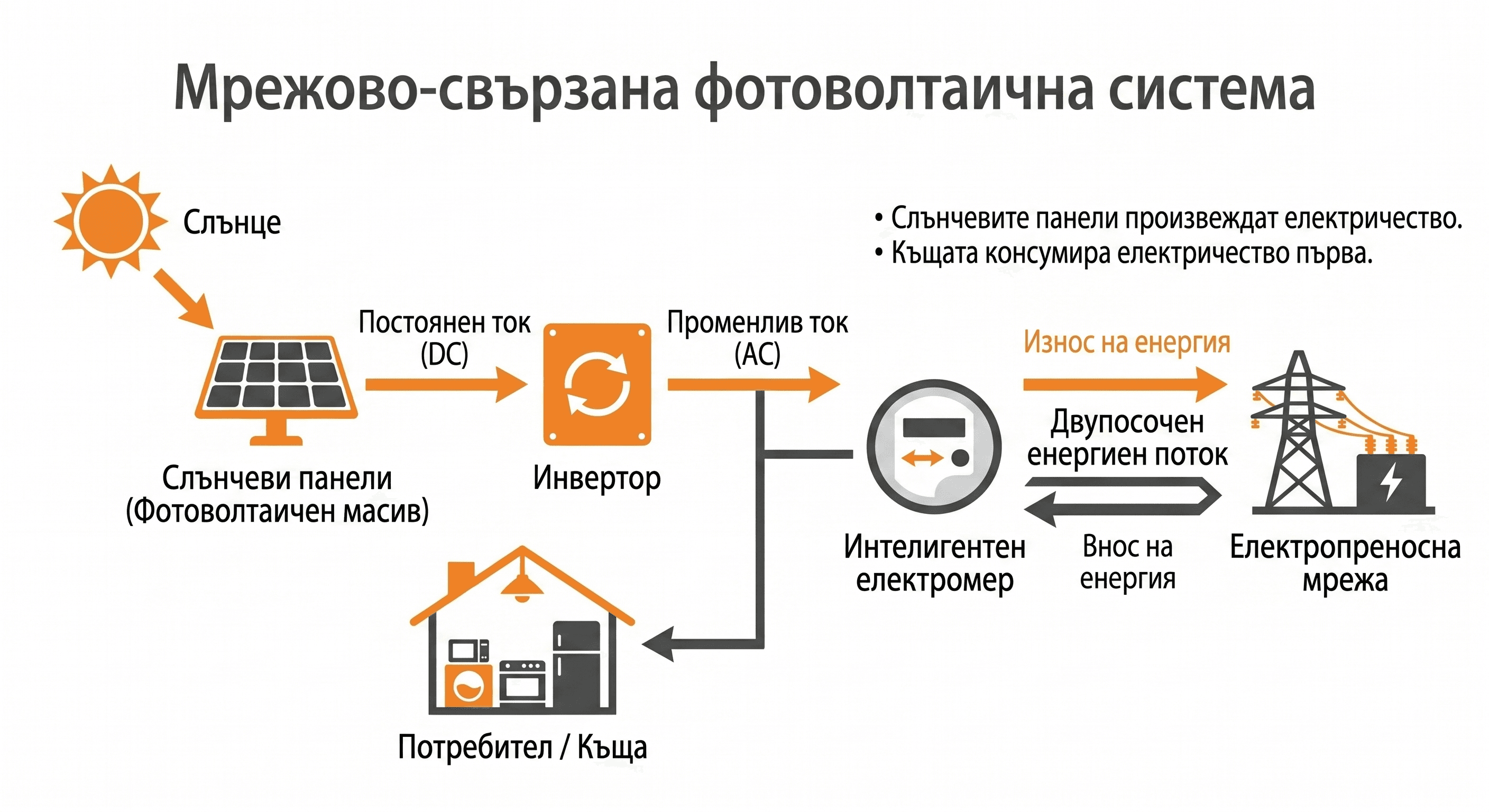
Grid-connected photovoltaic system — from the panel to the power grid.
How the system worksTo date
12+
years in the field
4
training centers in Bulgaria
850+
technicians trained
Open a course page for its programme, cities, dates and prices.
Free resources, self-assessment tests and tools for work in the field.
Active courses are streamed in a secure classroom. Chat, questions and recordings stay on our side, not on the video platform.
Upload or fill in your CV and choose which employers you want to apply to. Once you confirm, our team sends your application to the selected grid operators and/or leading companies in the photovoltaic sector.
Choose grid operators, leading solar companies or both, then upload or fill in your CV.
If you would rather work directly with end customers, you can build a professional profile on the technician map, so people looking for a solar specialist can get in touch with you.
Go to the technician mapWe forward your application to the employers you choose. The hiring decision is theirs — we do not promise a job or customers.
Scroll to follow how sunlight becomes power for your home.
It all starts at the sun. Photons hit the surface of the panel — even on a cloudy day there is useful radiation.
The photovoltaic array turns light into direct current (DC). The more panels there are, and the better they face the sun, the more energy.
The inverter turns direct current into alternating current (AC) — the same current the appliances in your home run on. The heart of the system.
The energy produced powers the house first. Air conditioning, water heater, lighting — everything runs straight off your roof.
The surplus flows back to the grid through a bidirectional meter. When the sun sets you draw it back — the balance always works in your favour.
Panels, inverters, mounting structures and real installations — shot during the courses and on site.
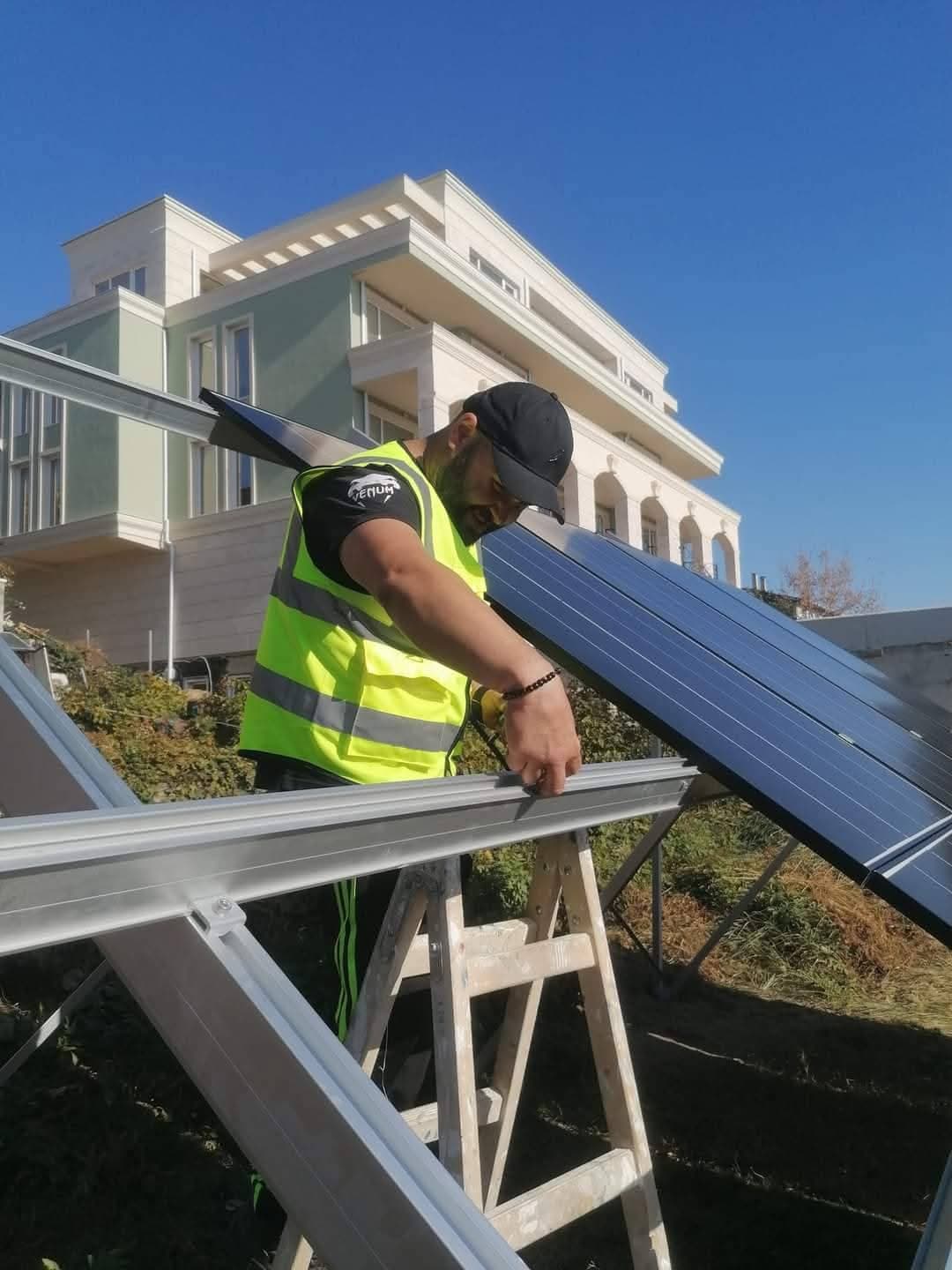
Real install on site — ground-mounted structure
01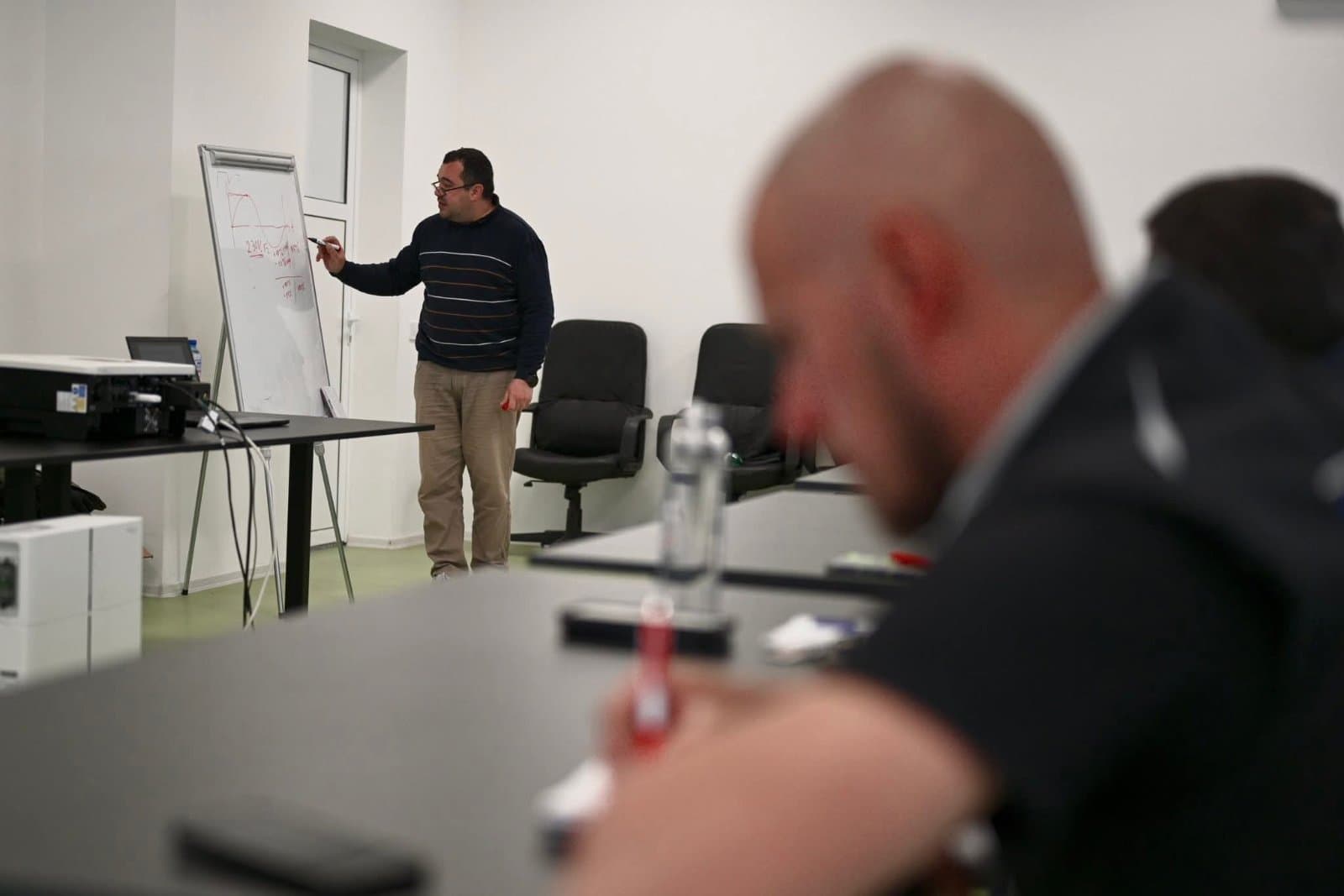
Theory lesson — the alternating current waveform
02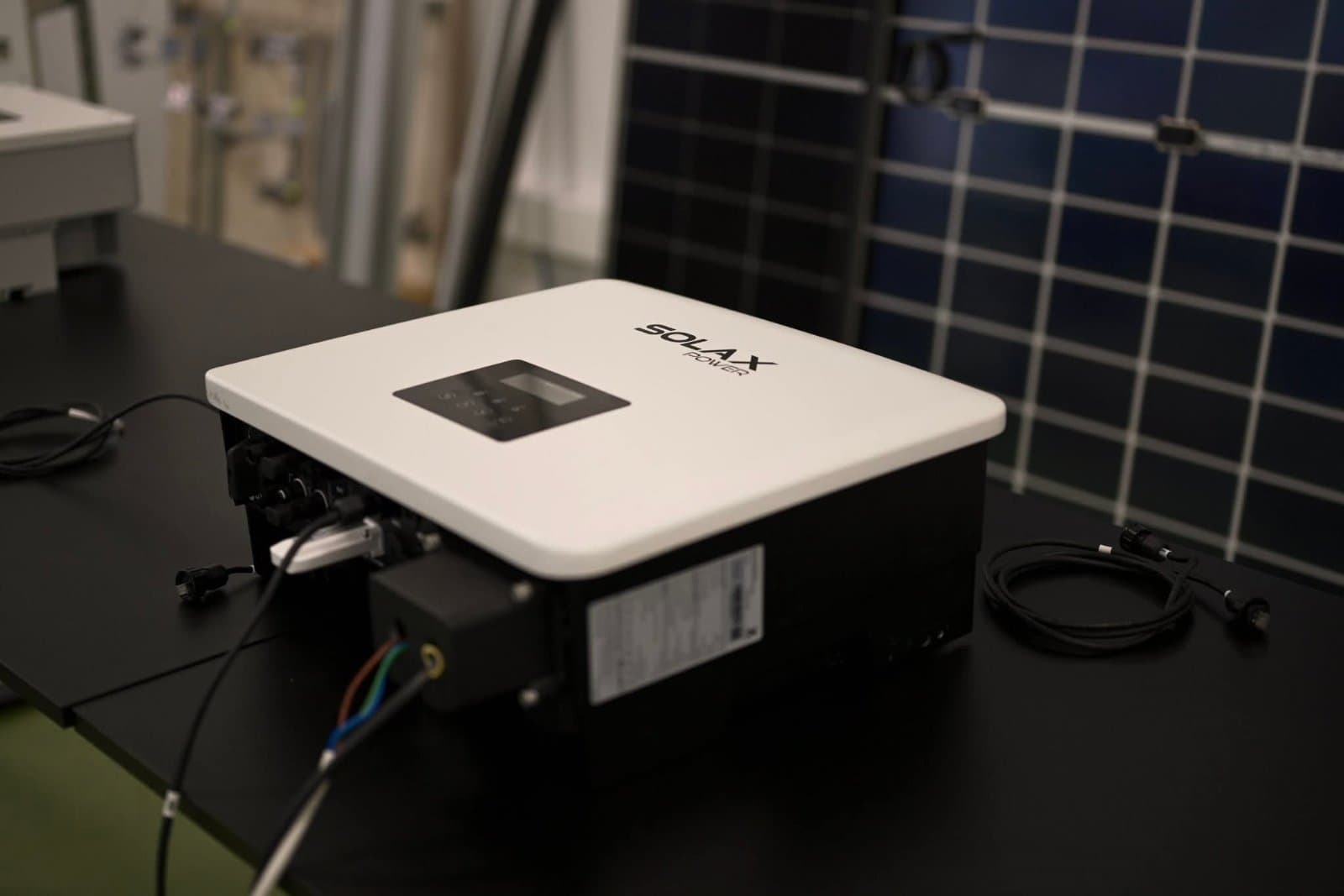
SolaX inverter — wiring detail
03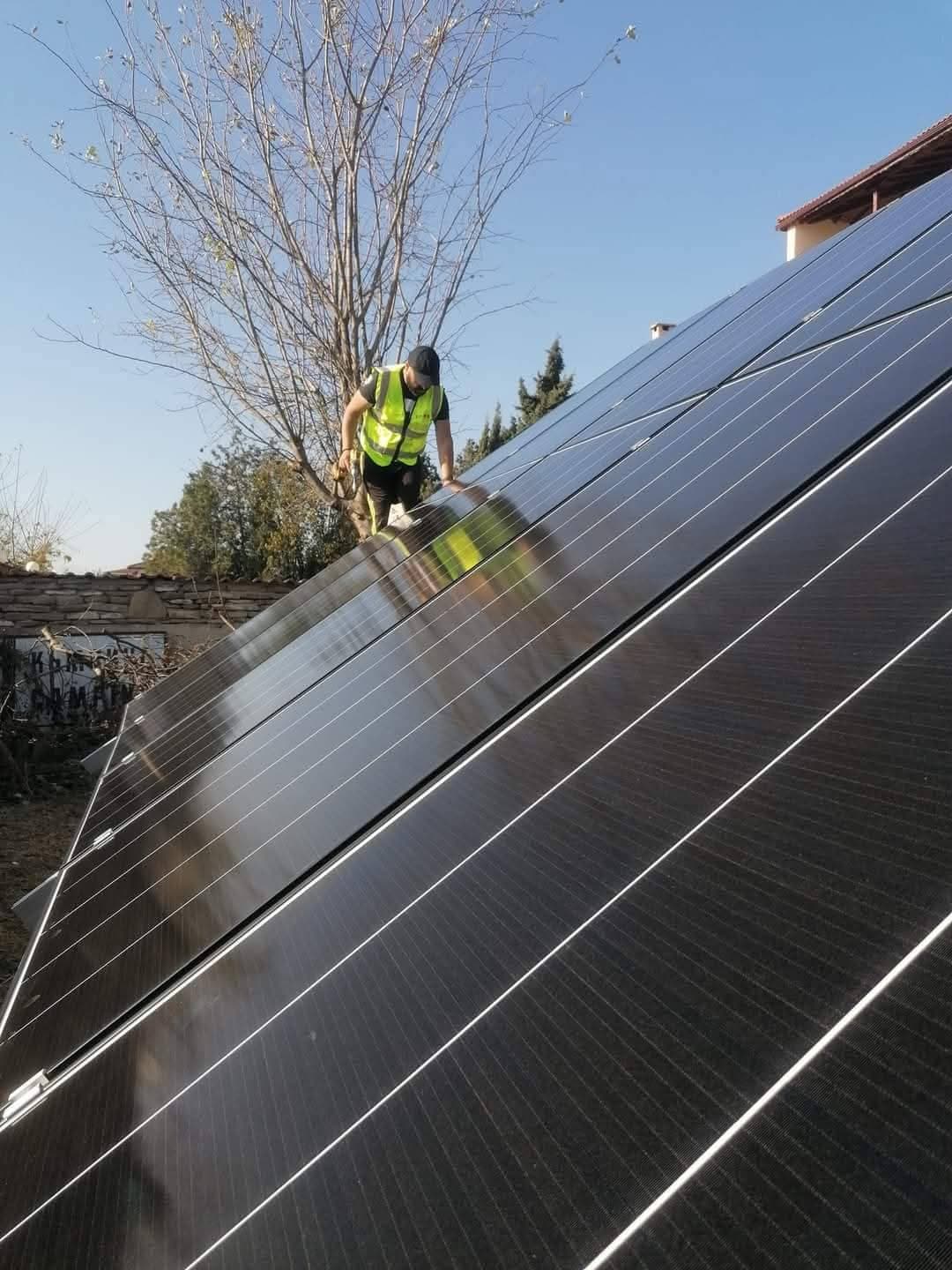
Mounting the array under a clear sky
04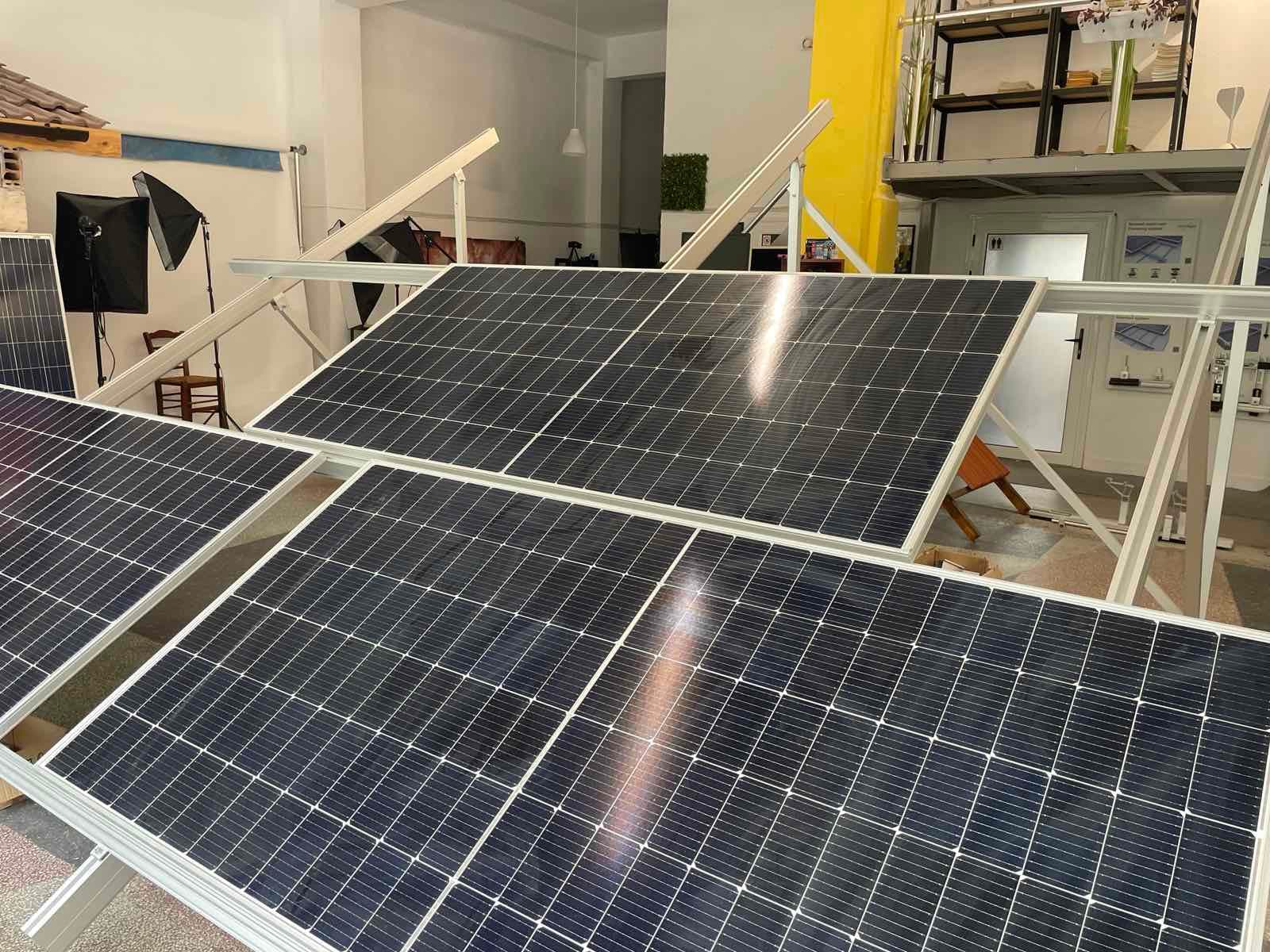
Panels on an adjustable mount — close-up
05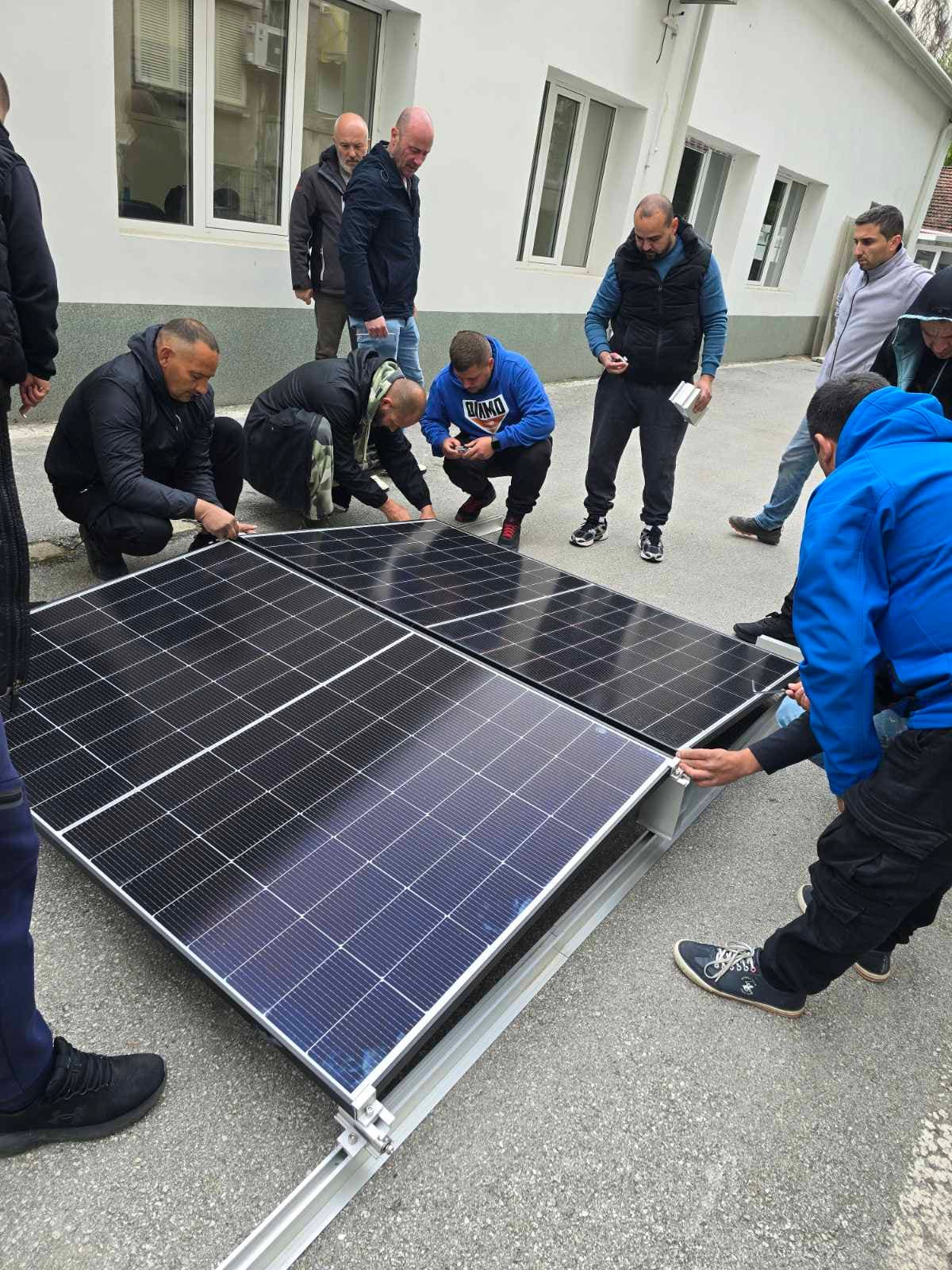
Hands-on exercise — assembling a panel
06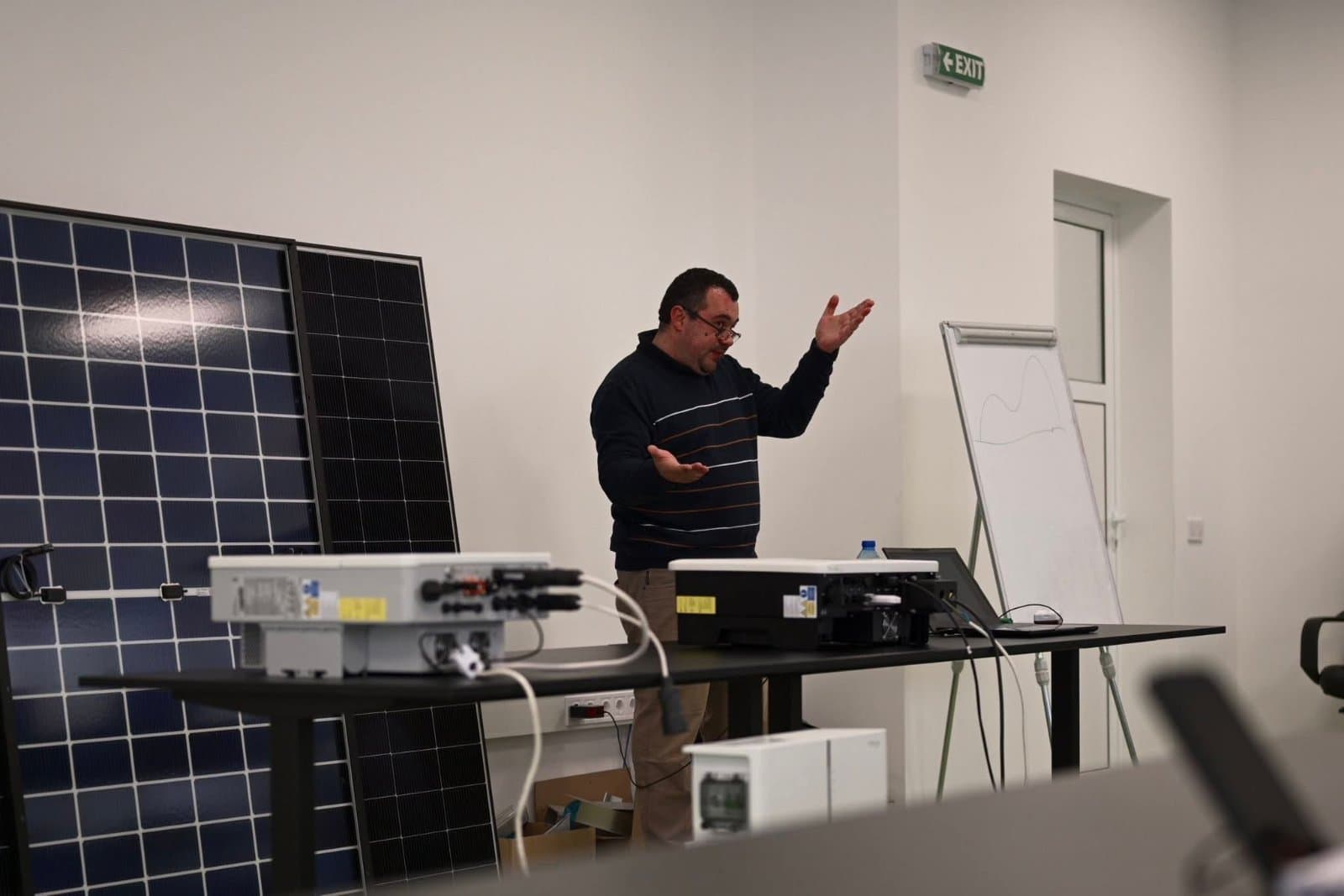
Demonstration with real equipment
07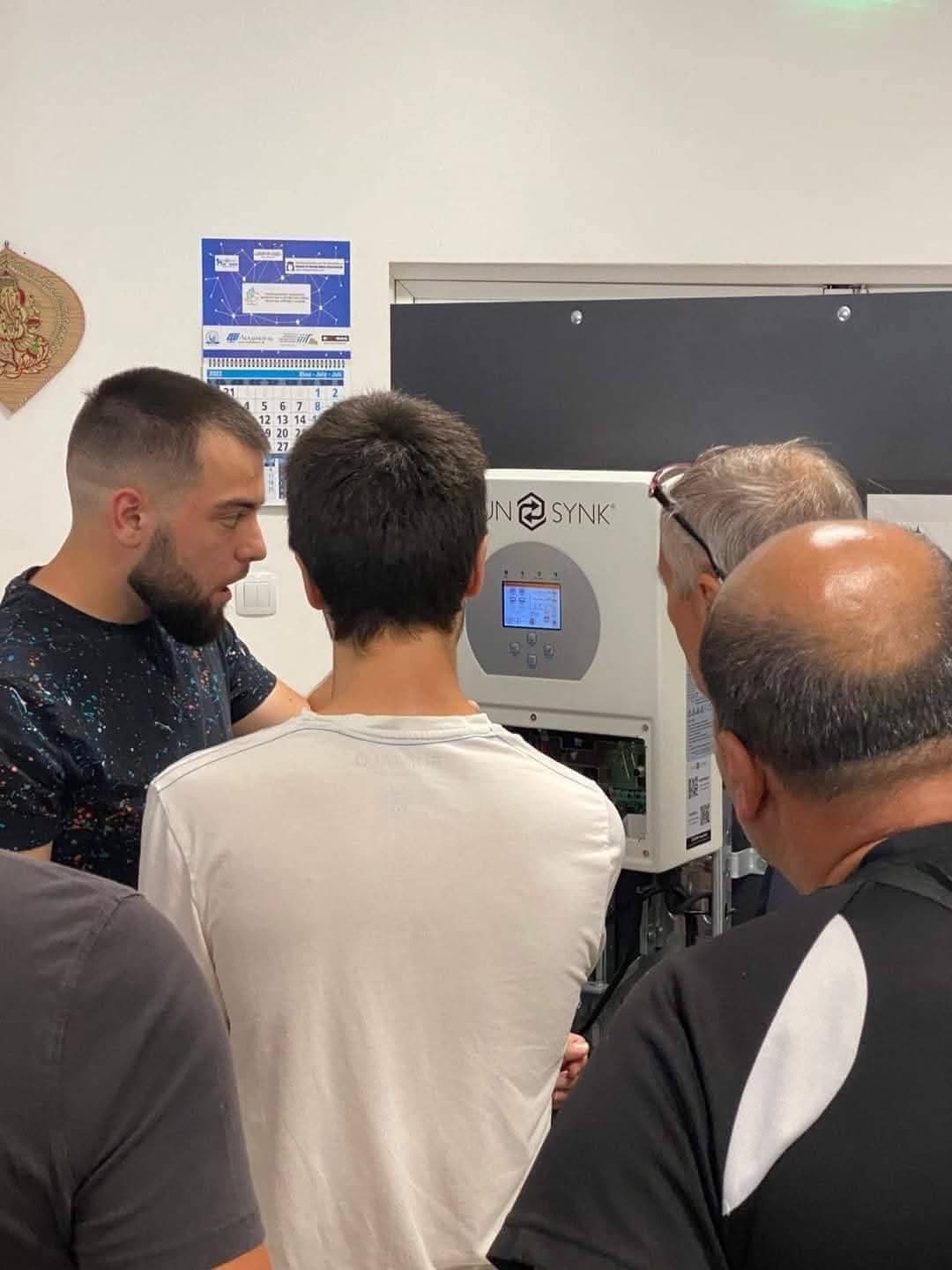
Sunsynk hybrid inverter — a closer look
08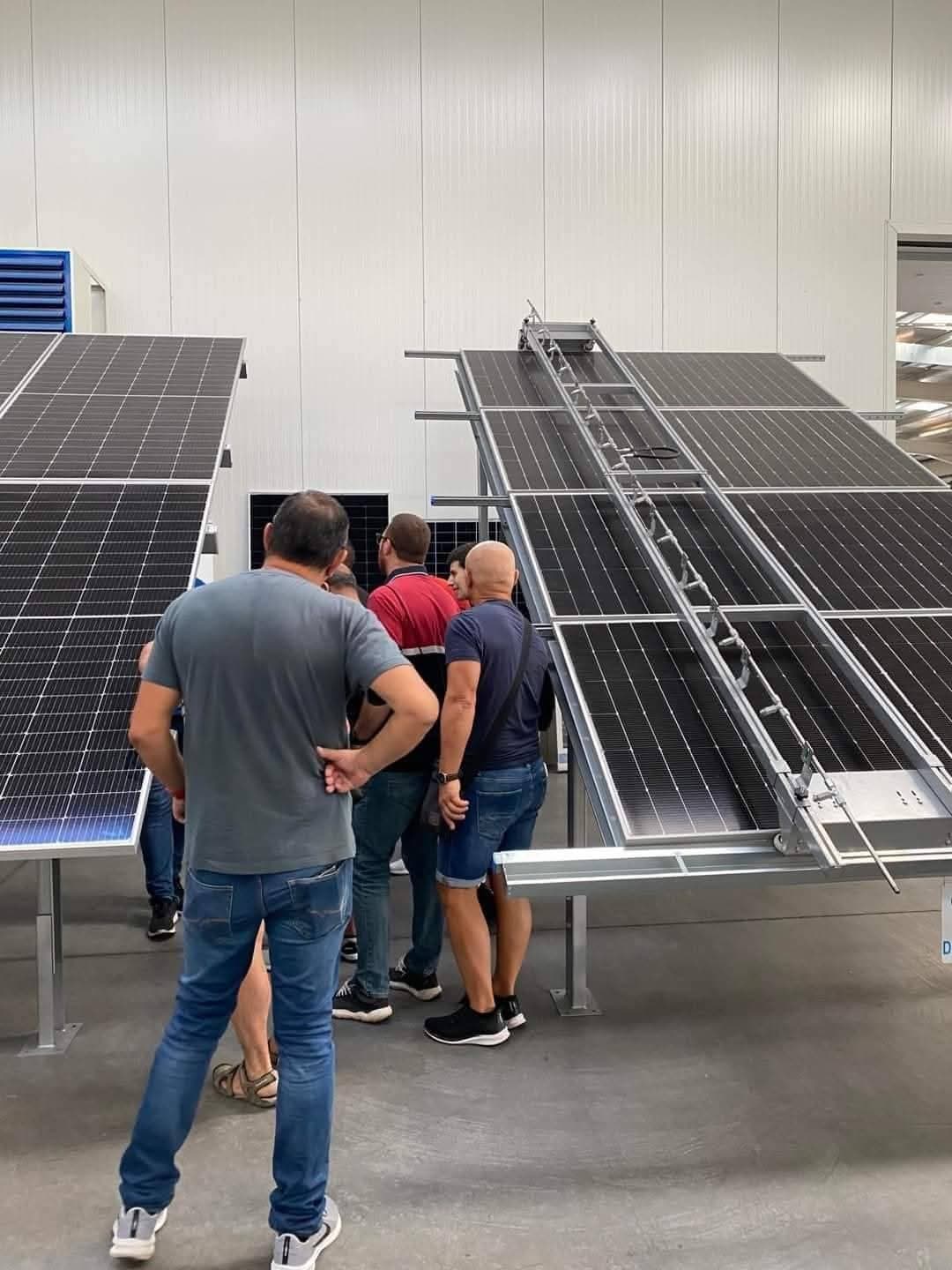
Mounting structure in the training room
09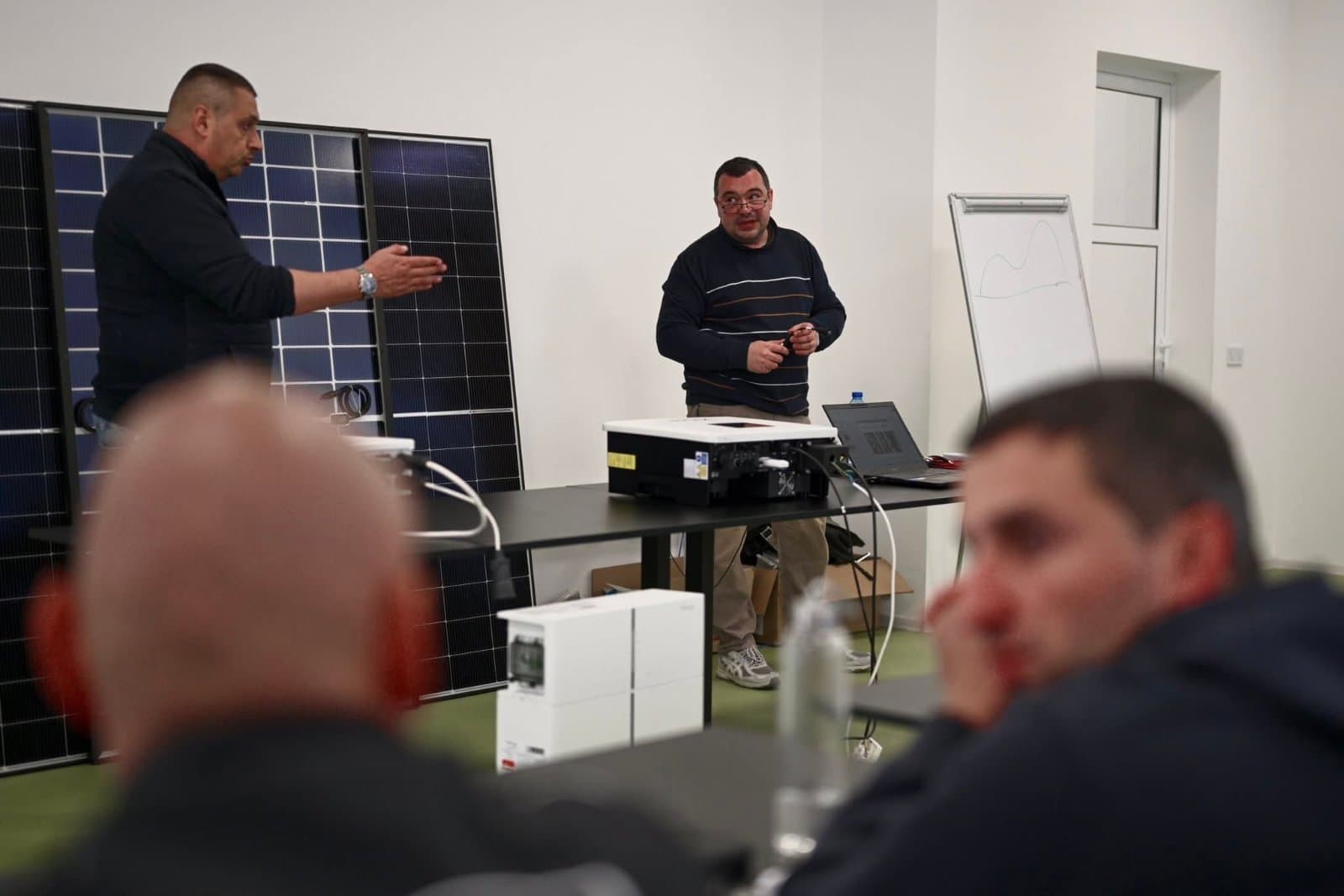
Presenting a panel in the classroom
10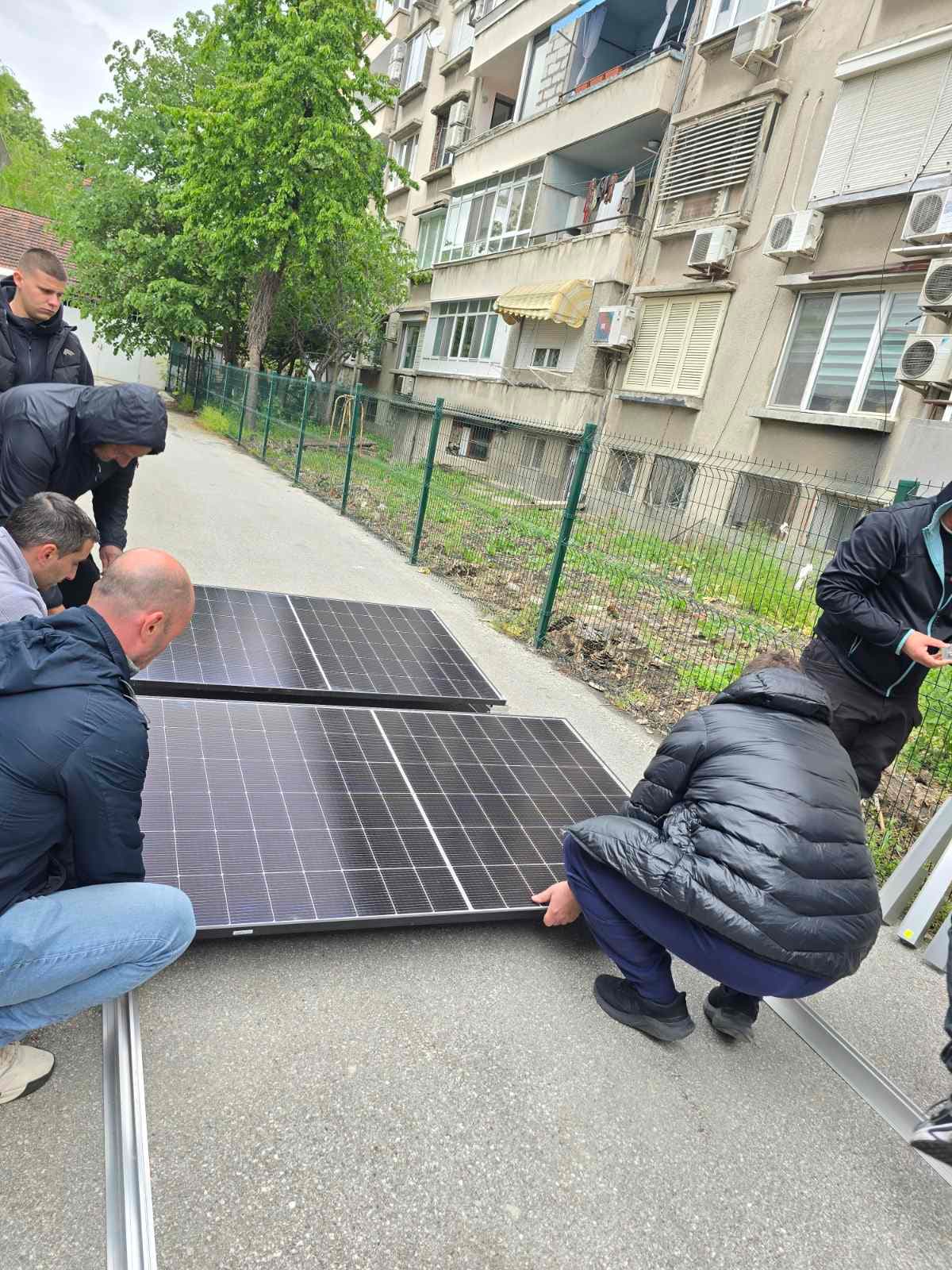
Positioning panels on a rail
11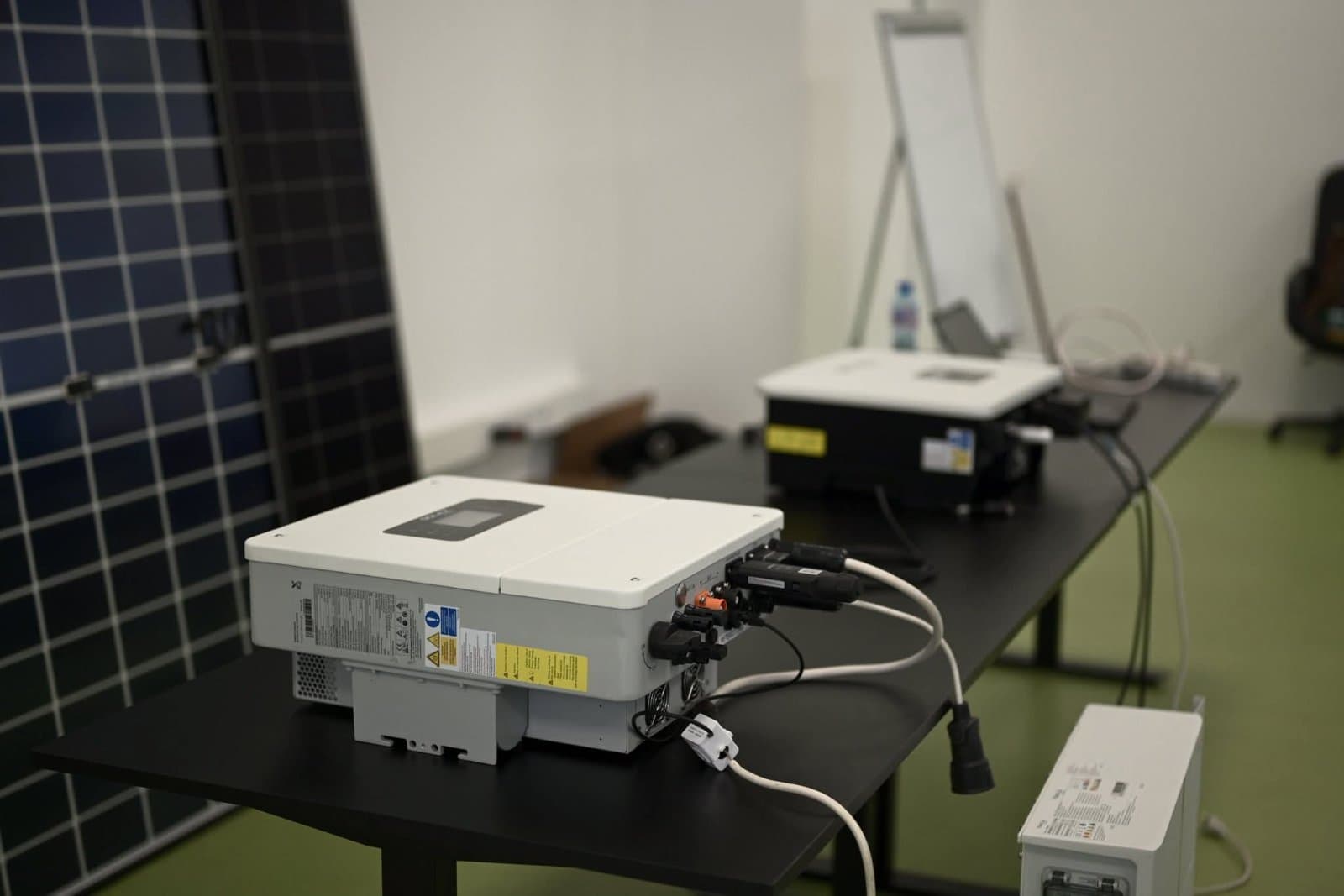
Connecting an inverter with MC4 connectors
12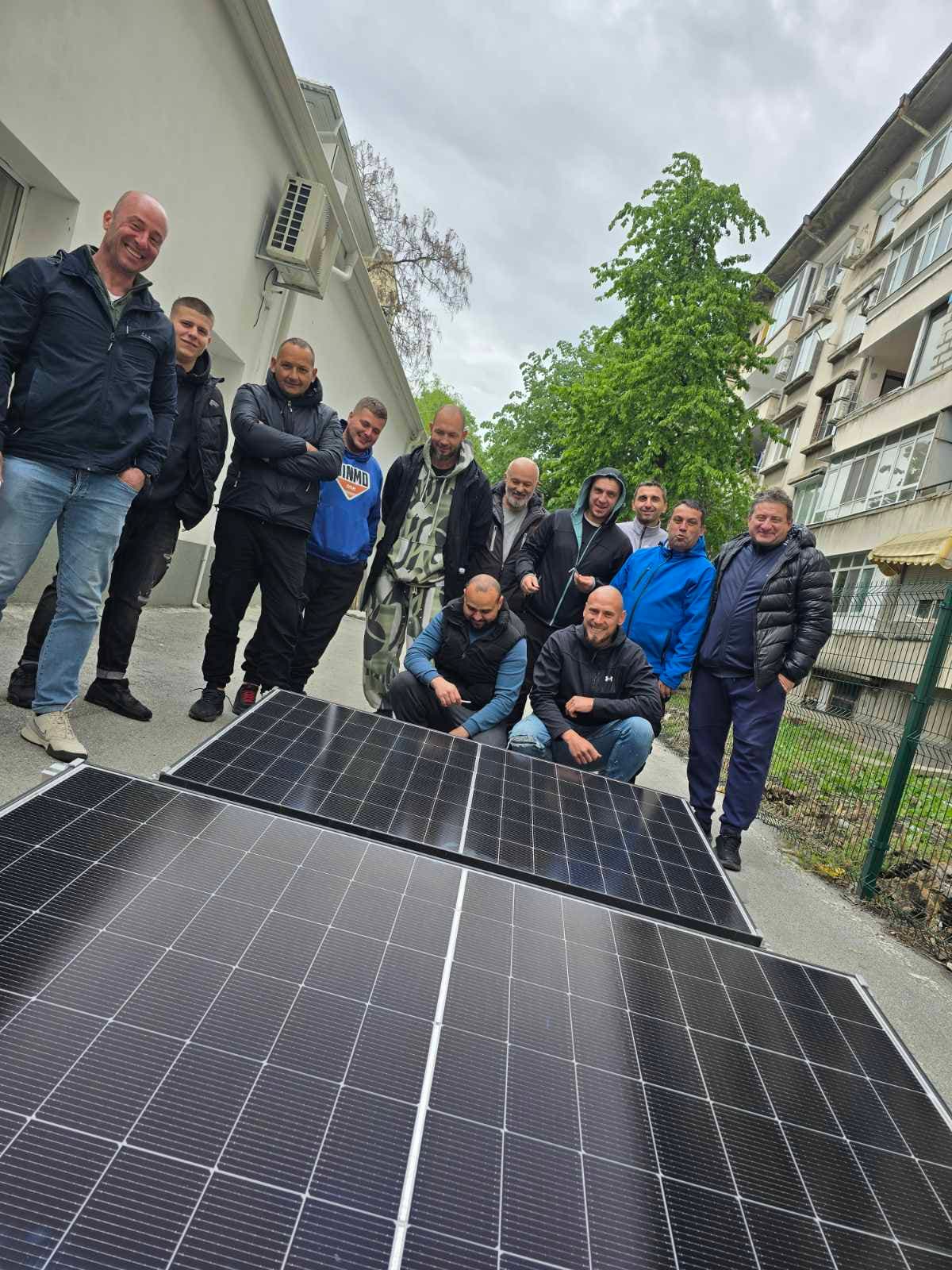
Course participants after finishing a module
13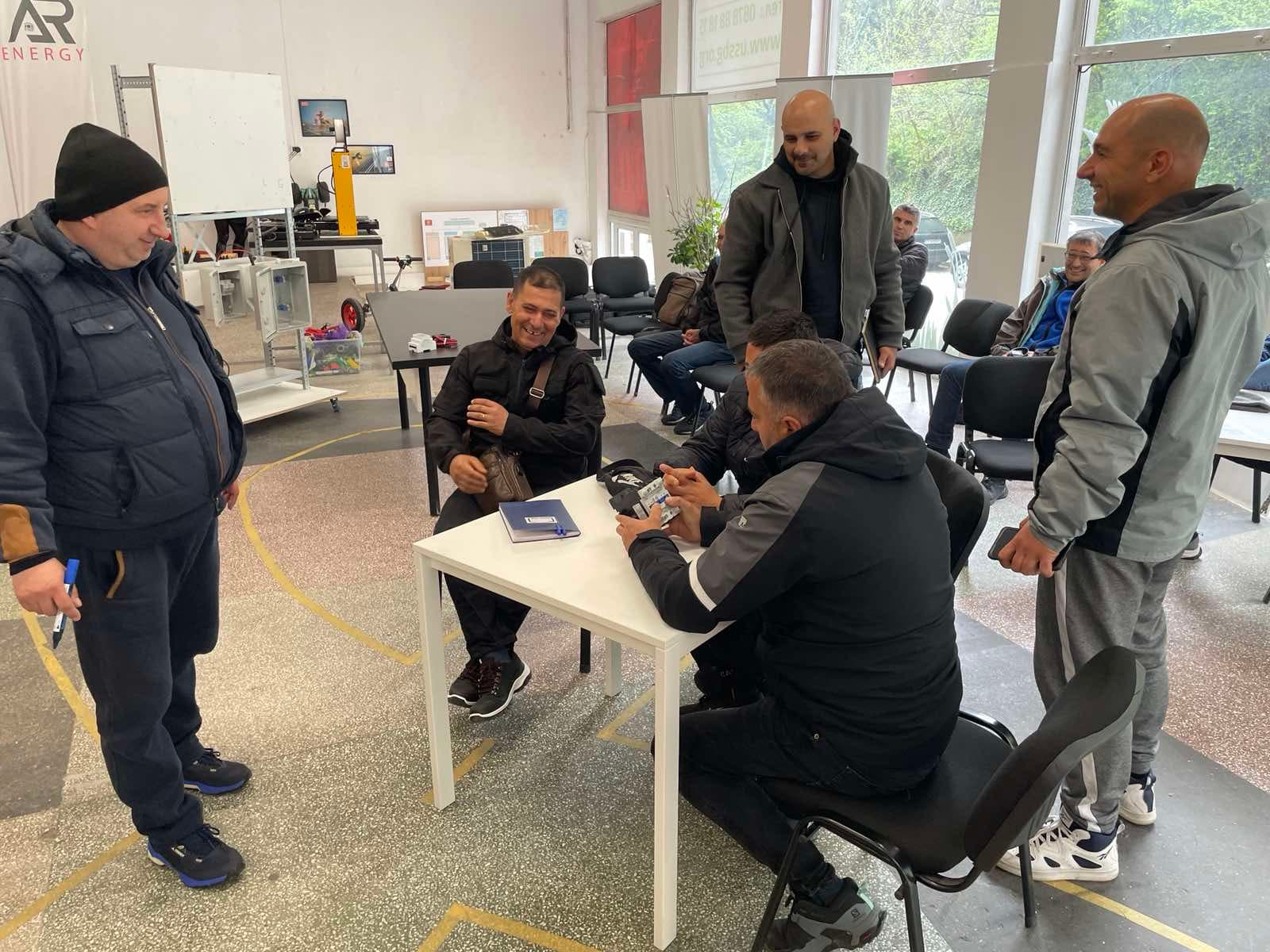
Working with equipment at the bench
14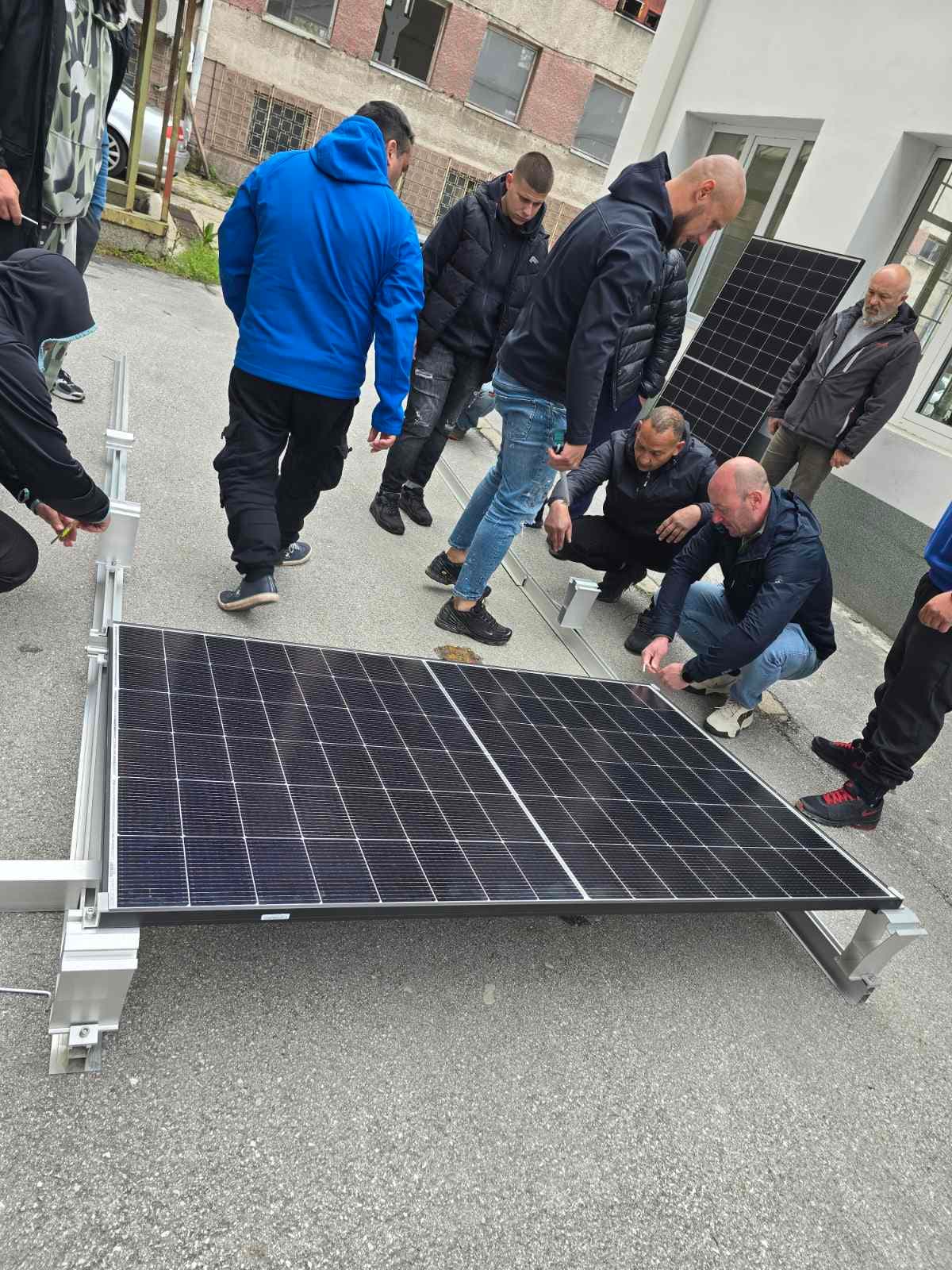
Mounting on a ground stand
15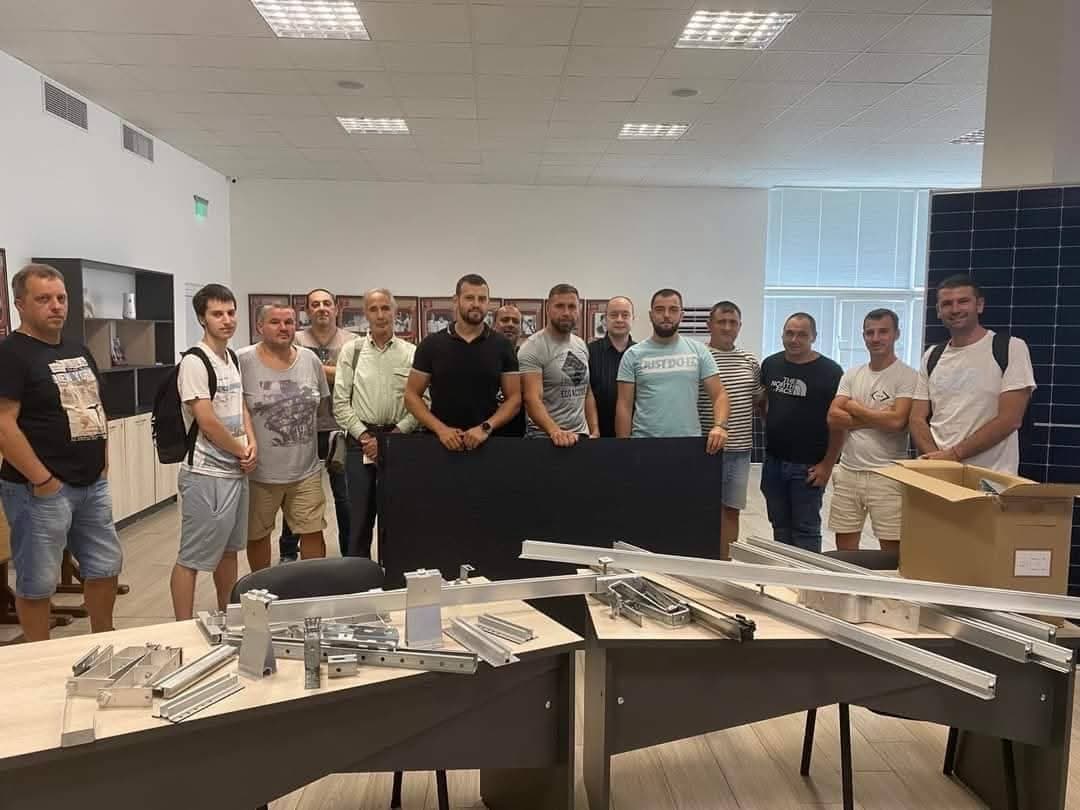
Group with mounting rails
16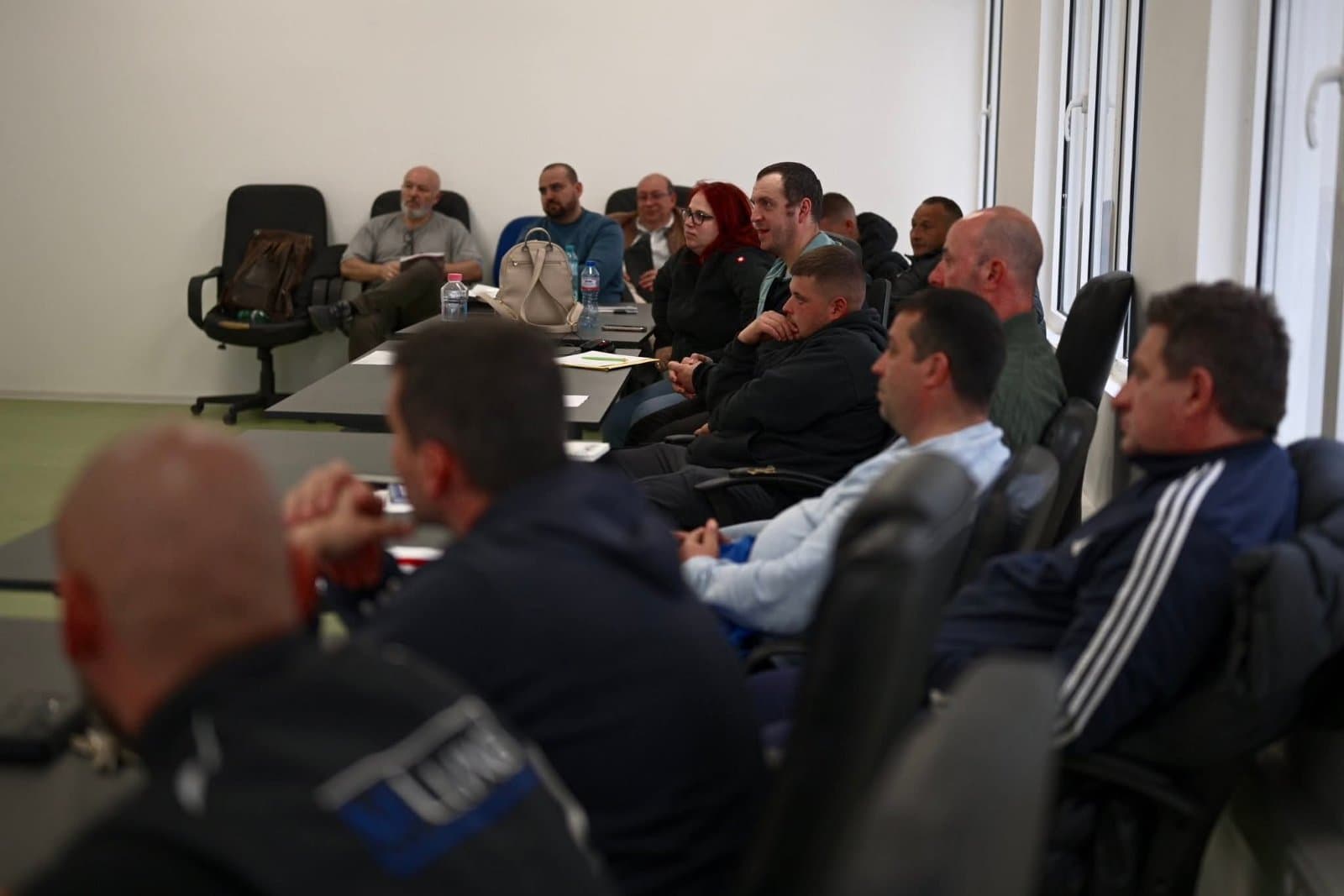
Classroom session — attention to detail
17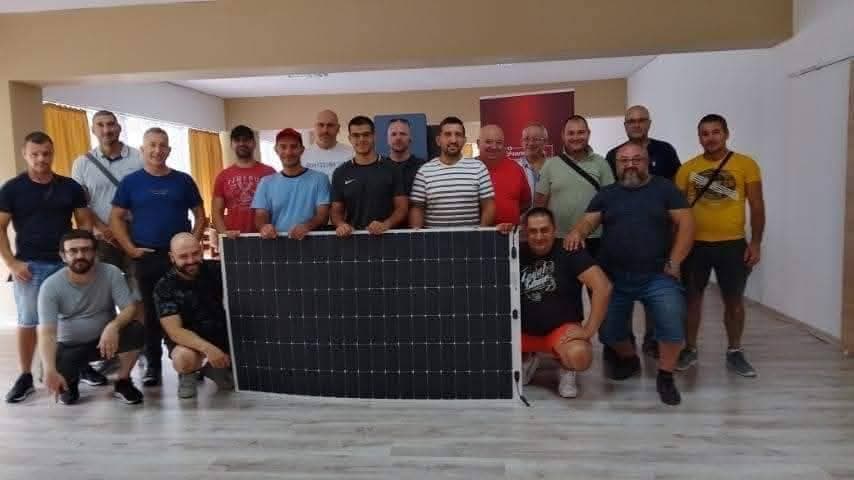
Group with a photovoltaic panel
18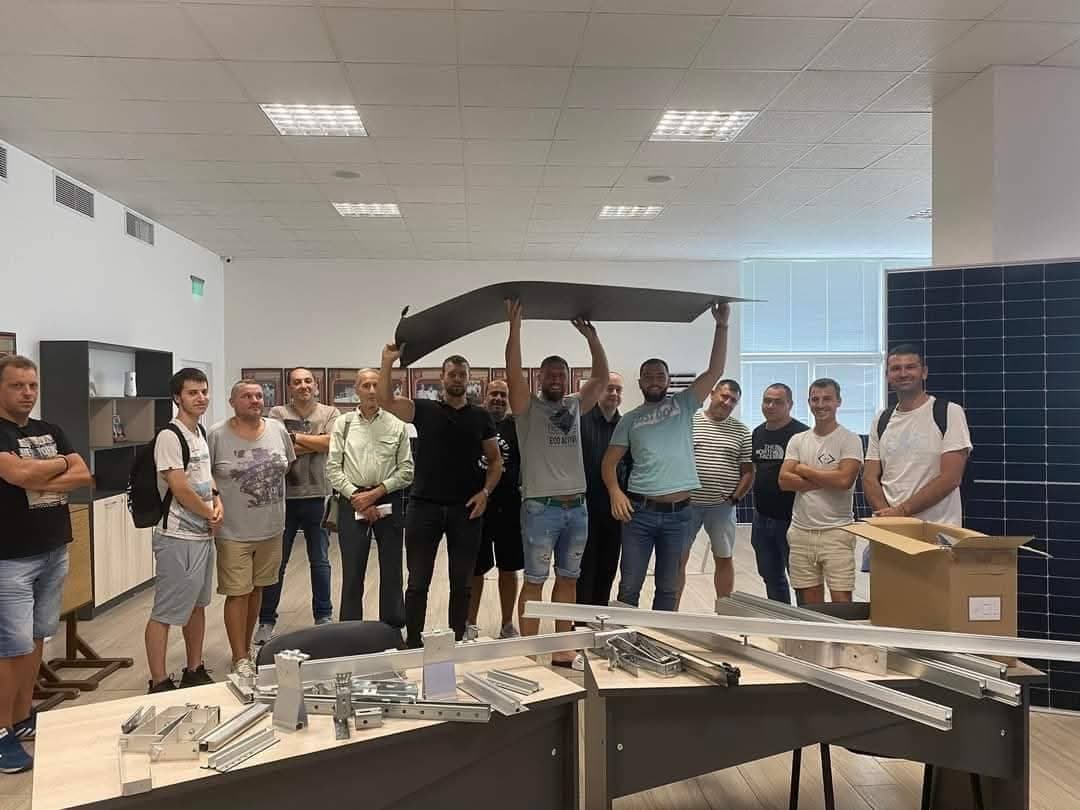
The team during training
19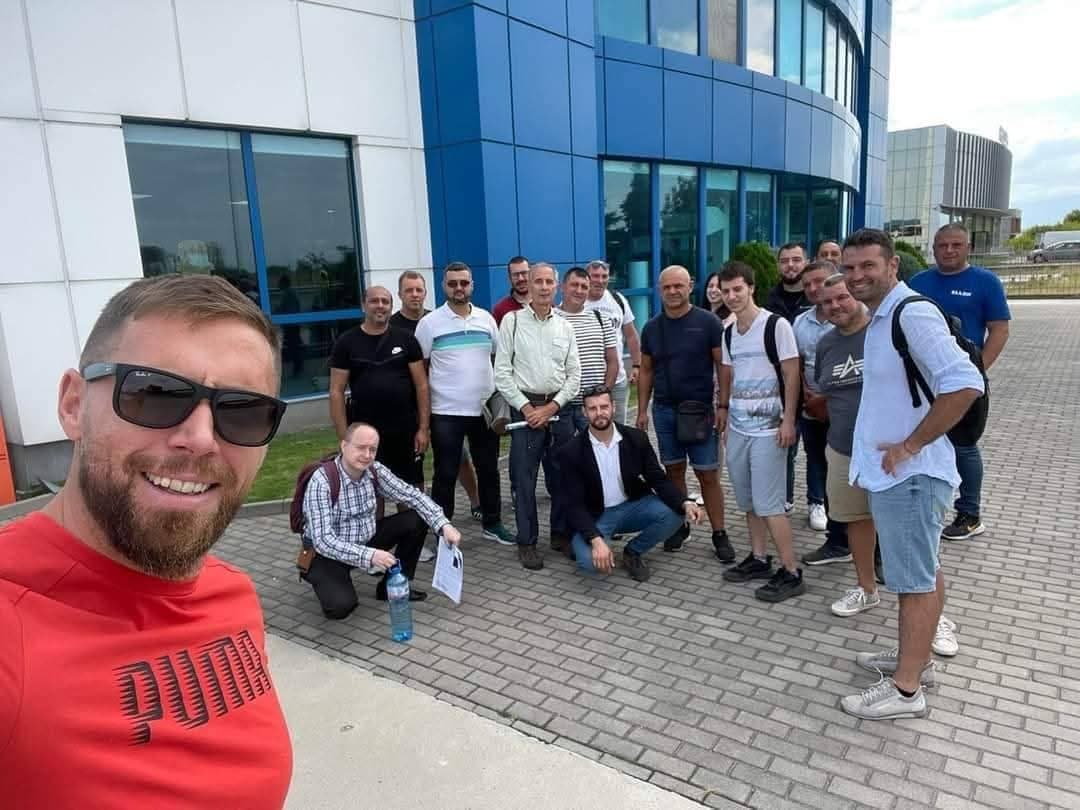
Visit to an equipment supplier
20Not marketing — an effect you see on the bill and in the value of the property.
You generate your own energy and buy far less from the grid. The investment pays back in years, not decades.
Every kilowatt-hour you generate is carbon you did not emit. Energy from the sun, with no noise and no emissions.
With a battery and a hybrid inverter you keep power through a grid outage. Less exposure to prices and to failures.
A property with a working photovoltaic system sells faster and at a better price. The asset earns while you live in it.